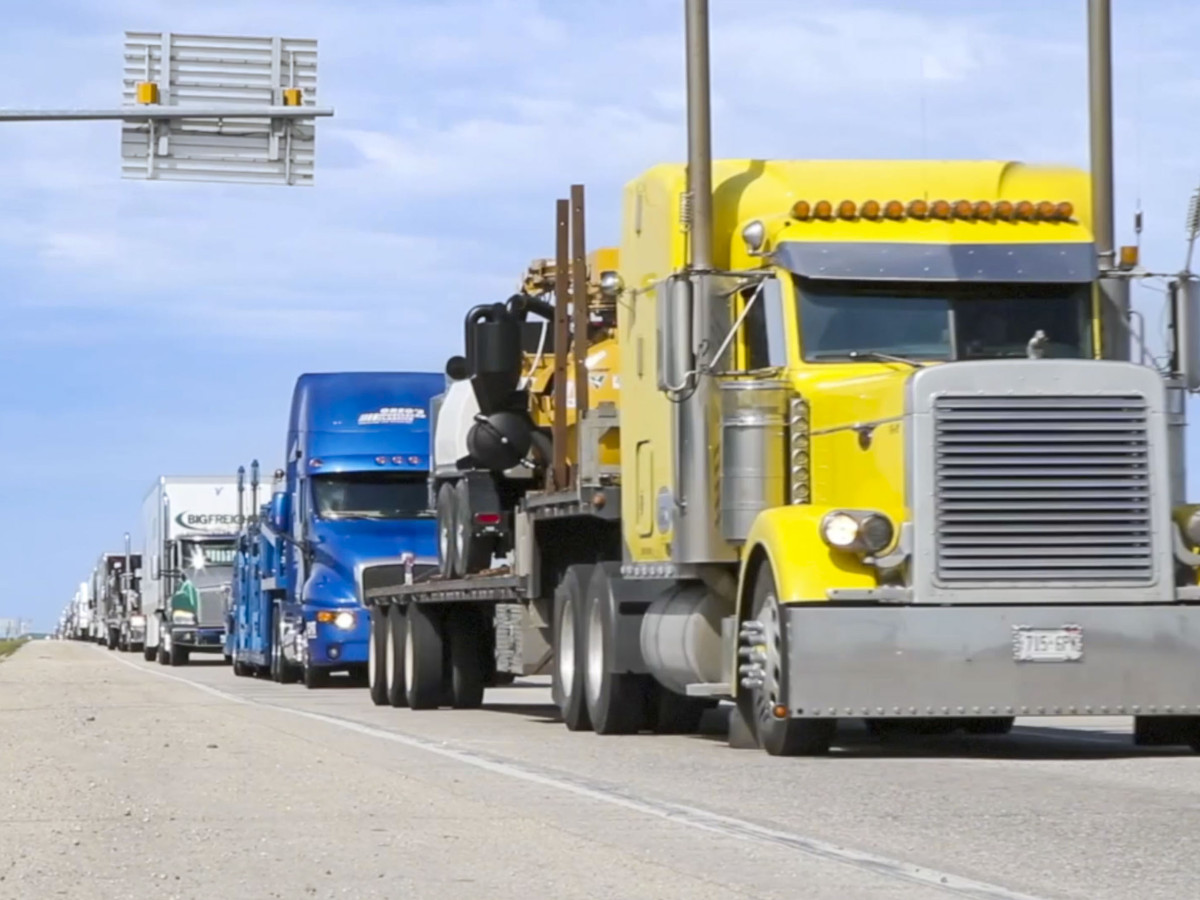
If you’re shipping goods across North America—or across the world—Winnipeg might be the most strategic place you need to consider.
With a central location, 24/7 cargo infrastructure and one of the largest inland ports on the continent, Winnipeg is quickly becoming a heavyweight in transportation and logistics. But this is no overnight success. Winnipeg’s emergence as a freight and logistics hub is the result of decades of investment, connectivity and coordination.
From Fortune 500 companies, like Sysco, to high-growth exporters, businesses that move products are increasingly choosing Winnipeg as their North American base of operations, and here's why.
Geography You Can’t Beat
Winnipeg sits at the geographical centre of North America, just 113 kilometres (70 miles) north of the U.S. border. It connects major east-west and north-south corridors, making it one of the few places in Canada where you can reliably reach U.S. markets without coastal delays or urban congestion.
A consumer population of over 100 million people is accessible within a 24-hour drive, giving companies operating out of Winnipeg a real advantage in last-mile delivery and regional distribution. Global companies should also look to Winnipeg for its niche logistics, value-added manufacturing and trade-based operations.
That’s not just theory—it’s how Winnipeg does business.
CentrePort Canada: A Global-Scale Inland Port
At the heart of Winnipeg’s logistics infrastructure is CentrePort Canada: one of North America’s largest tri-modal inland ports, spanning 20,000 acres, which offers access to:
- Three Class I railroads (CPKC, CN, and BNSF).
- 24/7 international air cargo at Winnipeg Richardson International Airport.
- Major highway networks, including the Trans-Canada Highway and CentrePort Canada Way, an expressway that bisects CentrePort Canada.
CentrePort Canada isn’t just vast—it’s also efficient. CentrePort Canada Rail Park, a 665-acre industrial project currently in active development, offers businesses direct access to CPKC’s East-West and North-South networks, and through federal government-regulated interswitching rules, access to CN and BNSF. For companies with cross-border trade, this is a rare and highly valuable advantage. Fastfrate Group recently opened its new facility after an investment of $55 million, once again highlighting the Winnipeg region as a major transportation hub.
CentrePort Canada is also designated as a Foreign Trade Zone (FTZ), streamlining customs and tax processes for both importers and exporters.
24/7 Cargo That Keeps Supply Chains Moving
Winnipeg Richardson International Airport is one of Canada’s busiest cargo hubs and Canada’s leader in dedicated freighter movements.
- Its central North American location and 24/7, 365 days a year operations help goods to be distributed globally within 48 hours.
- It connects directly to more than 25 major cargo destinations.
- It offers consistent capacity and rapid customs processing—rare finds in Canadian air freight.
- In Winnipeg, Cargojet—Canada's top cargo carrier—operates the country’s second-highest volume of air service, surpassed only by its headquarters in Hamilton.
Recent federal investments have expanded cargo capacity even further, securing Winnipeg’s role as a dependable gateway for international goods movement. Over $19 million has been earmarked for increased air cargo capacity at Winnipeg’s Richardson International Airport through Transport Canada.
A Thriving Transportation Ecosystem
The numbers tell the story:
- $7.58 billion: Transportation and logistics’ contribution to Manitoba’s GDP (2023).
- 50,760: People employed in the sector as of 2025.
- 3,194: Transportation and distribution companies based in the region as of 2024.
This includes companies like Bison Transport, TransX, Fastfrate and Canada Cartage, as well as a growing number of e-commerce fulfilment firms and agri-food exporters.
Winnipeg’s success in this sector is no accident—it’s backed by a highly skilled workforce, industry-aligned training programs and a provincial government that actively supports logistics investment.
How Winnipeg Stands Apart from the Competition
Cities like Kansas City, Minneapolis–St. Paul and Montreal all market themselves as transportation hubs, but Winnipeg has something they don’t:
- Tri-modal connectivity within a single inland port.
- Lower operating costs and available industrial land.
- Fast permitting and development timelines.
- Nearly 100% renewable energy, making operations greener from day one.
Some U.S. cities are currently facing labour shortages, but Winnipeg is already home to a growing, multilingual workforce, with access to immigration pathways that allow logistics employers to scale teams quickly and affordably.
Unlike some coastal Canadian hubs where congestion and infrastructure bottlenecks are growing concerns, Winnipeg is built for ease of movement.
Winnipeg: A Smarter Hub for What's Next
Whether you're moving goods across the prairies or across the Pacific, Winnipeg offers the connectivity, predictability and scale that modern supply chains require.
With the infrastructure already in place and plenty of room to grow, Winnipeg is the smart and strategic first choice for logistics and transportation investment in North America.
Contact Economic Development Winnipeg to learn more about local industrial land availability, workforce support and our investment services.
